
☀️The Hidden Summer Threat: Oxygen Depletion
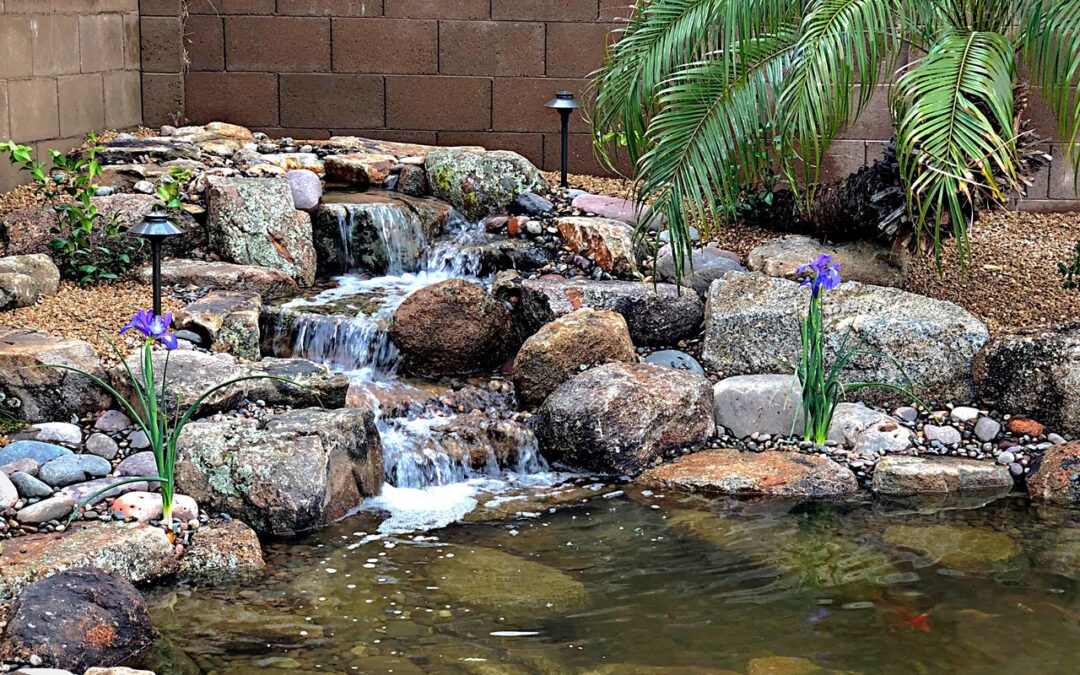
There is nothing quite like sitting on your patio on a warm May evening, listening to the rhythmic, soothing sound of your waterfall splashing over natural desert boulders. It looks beautiful, sounds relaxing, and feels like the ultimate backyard escape from the stresses of daily life. Because a well-designed waterfall moves a significant volume of water and creates plenty of surface white water, many homeowners naturally assume that it provides all the filtration and oxygenation their pond will ever need.
However, as we transition into the blistering, unrelenting heat of summer, your waterfall faces a hidden biological challenge. Understanding the science of water oxygenation is the key to keeping your prized Koi healthy, energetic, and safe in your koi pond Scottsdale through the hottest months of the year.
🌵The Problem with Warm Desert Water
The relationship between water temperature and oxygen levels is governed by a strict, unbreakable rule of physics: the warmer the water, the less dissolved oxygen it can physically hold.
During the spring, cooler water temperatures easily retain the oxygen generated by your waterfall. But when temperatures climb past 100 degrees, your pond water warms up rapidly, especially in shallow areas. At the exact same time that the water’s oxygen-holding capacity drops, a secondary challenge arises: your fish become much more active.
Koi are cold-blooded creatures, meaning their metabolism is dictated by the temperature of their environment. In warm water, their metabolic rate spikes, meaning they actually require more oxygen to breathe and digest food just as the pond’s natural supply is hitting its lowest point of the entire year.
💦Why the Waterfall Falls Short in the Summer
While a waterfall is excellent at creating surface agitation and exchanging gases at the very top of the pond, it has physical limitations when it comes to deep-water circulation:
🐟The Crowd Effect
If you have a high fish load, you will notice your fish start to crowd around the base of the waterfall, gasping at the surface. They aren’t playing; they are fighting for the only oxygenated water in the feature. This causes massive stress, weakens their immune systems, and leaves them highly vulnerable to diseases and parasites.
⬇️The Stratification Trap
A waterfall primarily oxygenates the water moving directly through the stream bed and the immediate impact zone where it hits the pond. It does not always create enough deep, driving circulation to reach the bottom layers of a deeper pond. This can lead to a stratified system where the top few inches of water have oxygen, but the deep, cool bottom layers become stagnant “dead zones” devoid of oxygen.
🔥The Heat Paradox
Because the bottom water is cooler, your fish naturally want to stay down low during the heat of the day to stay comfortable. However, if that bottom water lacks oxygen, your fish are forced to make a dangerous choice: stay in the cool, suffocating bottom or swim to the hot, sun-baked surface to breathe.
🫧The Solution: The Power of a Dedicated Aeration System
An aeration system is essentially the ultimate insurance policy for your pond ecosystem. Unlike a waterfall that pushes water down from above, an aerator utilizes an onshore, weather-proof compressor to pump air down through flexible tubing to heavy-duty diffuser discs resting on the very floor of the pond.
This simple addition transforms your ecosystem through three powerful mechanics:
🔁Bottom-Up Circulation
As millions of tiny bubbles rise from the diffuser discs on the pond floor, they create a powerful upward current. This current pulls the cool, stagnant water from the deep zones up to the surface, where it can release harmful gases (like carbon dioxide and methane) and absorb fresh oxygen from the air. This eliminates stratification and ensures every cubic inch of your pond is fully breathable.
❄️Evaporative Cooling
The constant column of rising bubbles breaks the surface tension of the water, creating a gentle dome of motion. In our incredibly dry climate, this constant surface movement greatly aids in evaporative cooling. This subtle process can keep your overall pond temperature a few degrees cooler than a feature that relies solely on a waterfall.
🦠Supercharging Your Beneficial Bacteria
Your fish aren’t the only living things in your pond that need to breathe. The beneficial bacteria living on your rocks, gravel, and inside your BioFalls require massive amounts of oxygen to break down fish waste, ammonia, and organic debris. Boosting your oxygen levels with an aerator supercharges these microscopic helpers. When bacteria have plenty of oxygen, they digest muck faster, resulting in cleaner water, fewer foul odors, and significantly less string algae.
🌞Keep Your Backyard Oasis Breathing Easy
Don’t wait for your fish to show signs of stress, lethargy, or gasping before taking action against the intense summer heat. A dedicated aeration system is a low-voltage, highly efficient, and incredibly reliable addition that protects your aquatic investment and keeps your fish family thriving all year long.
Call PondscapesAZ today to discuss adding a professional aeration system to your koi pond in Scottsdale and make sure your koi stay healthy throughout the hottest months of the year!
📞 480-987-7781

Owner, Lead Designer
Ralph Biezad is the owner and lead designer of Pondscapes, a premier pond and water-feature design-build company based in Gilbert, Arizona. With more than 20+ years of experience, Ralph has created hundreds of custom ponds, waterfalls, and aquatic landscapes throughout the Southwest. His philosophy centers on designing natural-looking, low-maintenance environments that blend seamlessly with Arizona’s climate and terrain.
As a Certified Aquascape Contractor, Ralph is recognized nationwide for his craftsmanship, creativity, and commitment to eco-balanced water features. His designs emphasize sustainability, habitat creation, and bringing clients closer to nature through water.

Recent Comments