
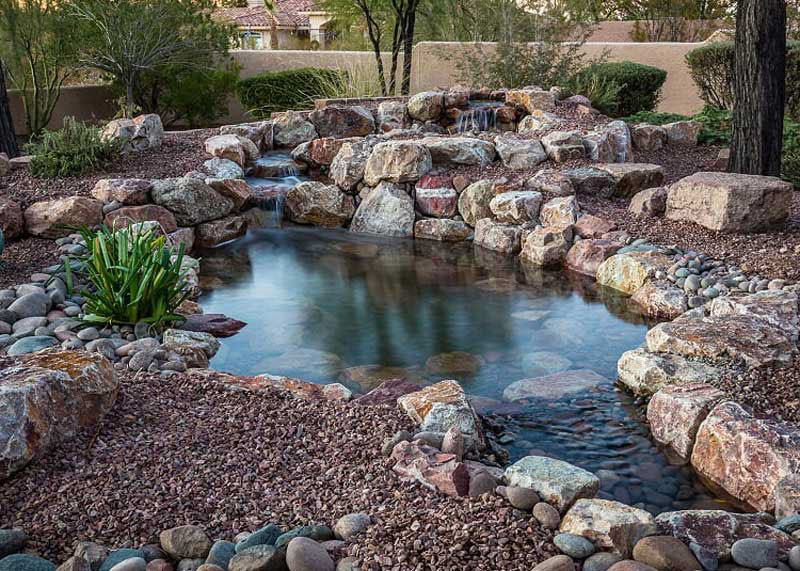
The arrival of July brings the absolute peak of solar intensity to the Sonoran Desert. When you combine twelve-plus hours of blazing, unfiltered desert sunlight with water temperatures consistently hovering in the mid-to-upper eighties, you create a highly volatile environment. This specific climate combination acts as a massive natural incubator for algae spores. It can be incredibly disheartening to step out onto your patio and notice that your pristine rock work is suddenly covered in thick green slime, or that your beautiful water has transformed into a murky bowl of green pea soup.
Before you run out to your nearest big-box store to purchase a quick-fix chemical algaecide, it is vital to pause and understand that algae is not an environmental disease; it is simply a natural symptom of an ecosystem out of balance. At PondscapesAZ, we are dedicated to teaching our clients the “Pond Life” philosophy. Our pond maintenance services in Scottsdale focus on treating the actual root cause of summer blooms using natural, sustainable, ecosystem-based solutions that keep your water crystal clear while fully protecting the long-term health of your Koi and aquatic plants.
Quick Diagnostic: String Algae vs. Planktonic Algae
| Algae Type | Common Name | Physical Appearance | Root Ecological Cause |
|---|---|---|---|
| String Algae | The Clinger | Long, hair-like green threads attached tightly to rocks and waterfalls. | Excess nitrates and phosphates in highly oxygenated, moving water. |
| Planktonic Algae | The Soup | Microscopic, single-celled free-floating organisms suspended in water. | Intense direct UV light exposure combined with stagnant, unshaded water. |
Identifying the Enemy: The Twin Algae Varieties
To properly solve a water clarity issue during the peak of summer, you must first accurately identify exactly which type of algae has taken up residence in your system.
July in Arizona typically brings two very distinct variations, each requiring a different ecological counter-strategy:

String Algae (The Clinger)
This is the long, fibrous, hair-like green growth that attaches itself directly to your stream beds, waterfall faces, and perimeter boulder work. It thrives in fast-moving, highly oxygenated water where it can rapidly absorb nutrients. While a small amount of string algae is completely normal and healthy for a natural pond, a sudden nutrient spike will cause it to explode across your rock work, trapping floating debris, clogging skimmers, and ruining the clean, natural look of your feature.

Planktonic Algae (The Soup)
This variety is comprised of billions of single-celled, free-floating microscopic organisms that remain suspended directly within the water column. It does not cling to the stone surfaces; instead, it turns the actual water completely green and opaque. Planktonic algae destroys your visual depth, making it impossible to see the bottom of your pond or monitor the health of your Koi. This variety thrives in ponds that lack proper mechanical filtration, experience poor water circulation, and receive zero shade from the intense midday sun.
The Hidden Danger of Quick-Fix Chemical Algaecides
When homeowners see their pond turning green, the natural response is often to panic and dump liquid copper, harsh algicides, or chemical clarifiers into the water. While these chemical products will successfully kill off the algae within 24 hours, they create a secondary environmental crisis that can be catastrophic for your water feature.
When massive amounts of algae die off simultaneously, the dead organic matter sinks to the bottom of the pond floor and begins to rapidly decompose. The natural process of organic decomposition consumes vast amounts of dissolved oxygen. In the high heat of July, your pond water is already physically limited in how much oxygen it can hold. A sudden, massive chemical clean-out frequently triggers a severe oxygen crash.

This sudden loss of oxygen can be fatal to your Koi within hours.
Furthermore, as the dead algae rots on the bottom, it releases its accumulated nitrates and phosphates right back into the water column. This creates a massive, concentrated food source that fuels an even larger, more aggressive algae bloom just a week later, locking you into a frustrating and expensive cycle of chemical dependence.
The Natural Solution Blueprint
Achieving lasting, crystal-clear water during an Arizona summer requires a holistic approach that starves the algae out naturally while supporting the biological cycle of your pond.
Deploy the Electronic Clarifier
Installing a system like the Aquascape IonoGen is a complete game-changer for managing string algae. This low-voltage smart device automatically releases safe, microscopic copper ions directly into the water stream as it pumps through your plumbing. These natural ions disrupt the cellular structure of string algae, preventing it from latching onto your boulders without ever impacting the health of your fish, your beneficial bacteria, or your prized water lilies.
Supercharge with Heterotrophic Bacteria
Regular, consistent additions of liquid beneficial bacteria or utilizing an automated Smart Dosing System ensures that your BioFalls mats are constantly packed with live, healthy microbes. These helpful bacteria rapidly consume the excess nitrates and phosphates generated by fish waste and organic dust, effectively putting any potential algae bloom on a strict starvation diet.
Increase Surface Shade Coverage
Ensure that your aquatic plants are healthy and thriving. Aiming for sixty to seventy percent of your pond’s surface to be shaded by the floating pads of water lilies blocks out the direct UV rays that planktonic algae absolutely requires to photosynthesize, naturally clearing up green water conditions without chemical intervention.

Restore Your Crystal-Clear Views
Don’t let summer algae blooms ruin the enjoyment of your custom water feature or cause unnecessary stress for your fish. If you are tired of guessing which products to buy or want to install a permanent, automatic water clarifying system that does the heavy lifting for you, PondscapesAZ is ready to assist.
Contact us today to consult with our ecosystem experts and discover how simple it is to maintain clear, beautiful water all summer long!
 480-987-7781
Owner, Lead Designer
Ralph Biezad is the owner and lead designer of Pondscapes, a premier pond and water-feature design-build company based in Gilbert, Arizona. With more than 20+ years of experience, Ralph has created hundreds of custom ponds, waterfalls, and aquatic landscapes throughout the Southwest. His philosophy centers on designing natural-looking, low-maintenance environments that blend seamlessly with Arizona’s climate and terrain.
As a Certified Aquascape Contractor, Ralph is recognized nationwide for his craftsmanship, creativity, and commitment to eco-balanced water features. His designs emphasize sustainability, habitat creation, and bringing clients closer to nature through water.

Recent Comments