
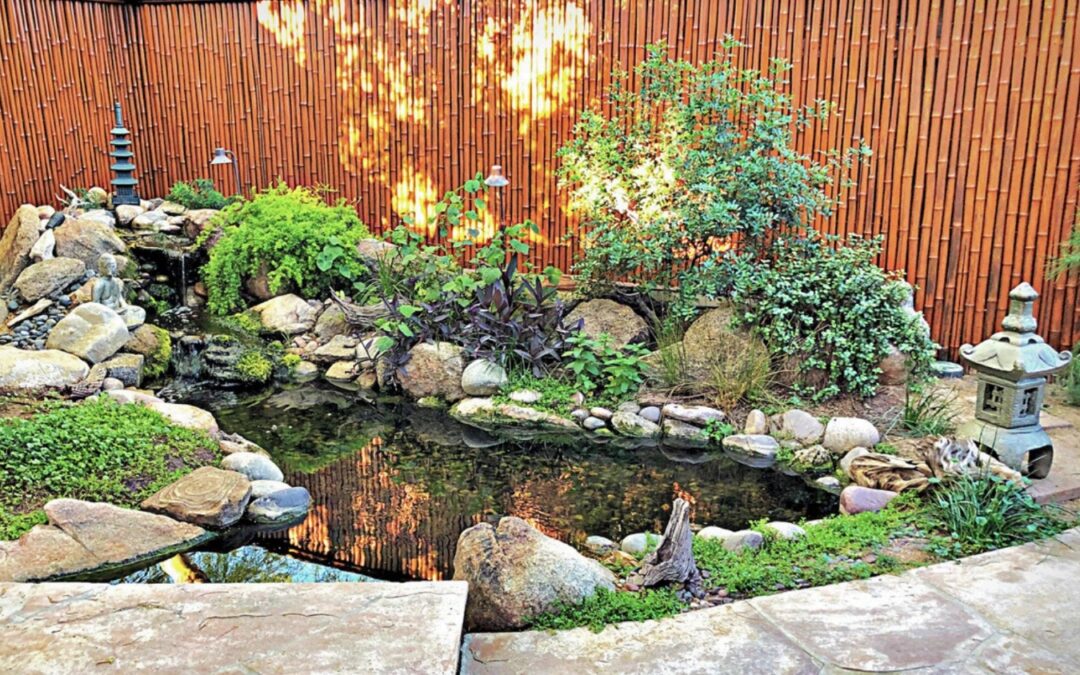
During this month, backyard water features operate under severe environmental stress. While cascading waterfalls and river boulders create a peaceful aesthetic, a critical invisible process is unfolding beneath the surface: the struggle to maintain adequate dissolved oxygen levels. Warm water naturally holds significantly less gas than cool water, creating a constant respiratory challenge for your Koi and beneficial bacteria.
Most pond owners are familiar with the obvious signs of oxygen distress, such as fish gathering directly at the surface and gasping for air. However, waiting until your Koi are gasping means your ecosystem is already in a critical state.
We want to help you identify environmental shifts before they turn into livestock emergencies. By learning to recognize these three silent warning signs of low dissolved oxygen, you can take action early and keep the ecosystem of your koi pond Scottsdale balanced all summer long.
Low Dissolved Oxygen Symptom Matrix
| Warning Sign | Visual Appearance | Underlying Ecological Cause | Danger Level |
|---|---|---|---|
| The Waterfall Crowd | Fish hovering constantly in the stream plunge pool. | Seeking localized gas exchange where water crashes. | Moderate (Action Required) |
| Persistent Surface Foam | Thick, soapy bubbles clinging to edges that do not pop. | Accumulation of dissolved organic compounds (DOCs). | High (Requires Aeration) |
| Sudden Water Dullness | Loss of visual clarity and “tea-colored” tint. | Mass die-off of oxygen-starved beneficial bacteria. | Critical (Immediate Intervention) |
Sign 1: The Waterfall Crowd (Localized Concentration)
One of the earliest, most subtle indicators of falling oxygen levels is a change in your fish’s swimming patterns. Under ideal conditions, healthy Koi and goldfish explore the entire pond, grazing along rock shelves, swimming through deep zones, and investigating plant roots.
However, when overall dissolved oxygen levels across the main basin drop below 5.0 milligrams per liter (mg/L), fish alter their behavior:
- They abandon the deep shelves and gather strictly in the shallow plunge pool directly beneath your waterfall.
- They face upstream into the current, hovering with minimal body movement.
- They show little interest in exploring other areas of the feature, even during feeding time.
Low Main Basin Oxygen ➡️ Fish Migrate to Plunge Pool ➡️ High Stress & Crowd Friction
Homeowners often mistake this gathering as fish “playing in the waterfall.” In reality, they are congregating at the only spot in the feature where mechanical agitation actively forces oxygen into the water column. When you observe your fish crowding the return, it means the main body of your pond has developed stagnant, low-oxygen dead zones.
Sign 2: Persistent Surface Foam (Dissolved Organic Build-Up)
Another silent warning sign appears not on your fish, but on the surface tension of the water itself. If you notice a persistent layer of thick, white, soapy foam building up around the perimeter rocks or floating in corners without popping, your pond is telling you that its oxygen-driven self-cleaning cycle has stalled. This surface foam is caused by a concentration of Dissolved Organic Compounds, a mixture of unrefined proteins from fish waste, decaying plant matter, and airborne dust.
In a well-oxygenated pond, aerobic heterotrophic bacteria living in your gravel beds rapidly digest these organic proteins before they can build up. However, these beneficial bacteria require massive amounts of oxygen to function. When dissolved oxygen levels drop, these bacteria go dormant or die off, allowing raw proteins to accumulate. These proteins alter the surface tension of the water, trapping air bubbles created by your waterfall and forming persistent foam.
Sign 3: Sudden Water Dullness and Loss of Polish
The third warning sign is a subtle change in visual water quality. A healthy, fully oxygenated Aquascape ecosystem possesses a distinct visual “polish”; the water appears crystal clear, allowing you to see the textures of gravel on the bottom shelves.
When oxygen levels drop, that visual polish vanishes within a 24-to-48-hour window:
- The water takes on a dull, grayish, or slightly “tea-colored” appearance.
- Suspended organic dust stays trapped in the water column instead of settling into filtration mats.
- A slight, musty or earthy odor becomes noticeable when standing near the stream.
This sudden loss of clarity occurs because the aerobic biological film living on your rocks is collapsing. When aerobic bacteria lack oxygen, anaerobic bacteria (which do not require oxygen) take over. Anaerobic digestion is vastly slower and less efficient, releasing foul-smelling byproducts and allowing fine particulate matter to float freely in the water column.
The Remedy: Bottom-Up Aeration and Circulation
If you observe any of these three silent warning signs in your feature, taking immediate action will prevent a full-scale ecosystem collapse:

Step 1. Install Submerged Aeration
A waterfall alone oxygenates primarily the top layer of water. Adding an Aquascape aeration kit pumps air down to diffuser discs on the pond floor. As millions of fine bubbles rise, they turn over the water column, bringing stagnant bottom water to the surface for gasexchange.

Step 2. Add Liquid Beneficial Bacteria
Boost your biological filtration with liquid beneficial bacteria. Introducing live aerobic microbes helps digest organic buildup once oxygen levels are restored.

Keep Your Oasis Breathing Easy This Summer
Don’t wait for your fish to show severe signs of distress before taking action against summer heat. A dedicated aeration system for you koi pond in Scottsdale is a reliable, low-energy addition that protects your investment and keeps your sanctuary healthy year-round.
Call PondscapesAZ today to schedule an aeration assessment and keep your pond thriving through the hottest months of the year!
 480-987-7781
Owner, Lead Designer
Ralph Biezad is the owner and lead designer of Pondscapes, a premier pond and water-feature design-build company based in Gilbert, Arizona. With more than 20+ years of experience, Ralph has created hundreds of custom ponds, waterfalls, and aquatic landscapes throughout the Southwest. His philosophy centers on designing natural-looking, low-maintenance environments that blend seamlessly with Arizona’s climate and terrain.
As a Certified Aquascape Contractor, Ralph is recognized nationwide for his craftsmanship, creativity, and commitment to eco-balanced water features. His designs emphasize sustainability, habitat creation, and bringing clients closer to nature through water.

Recent Comments