
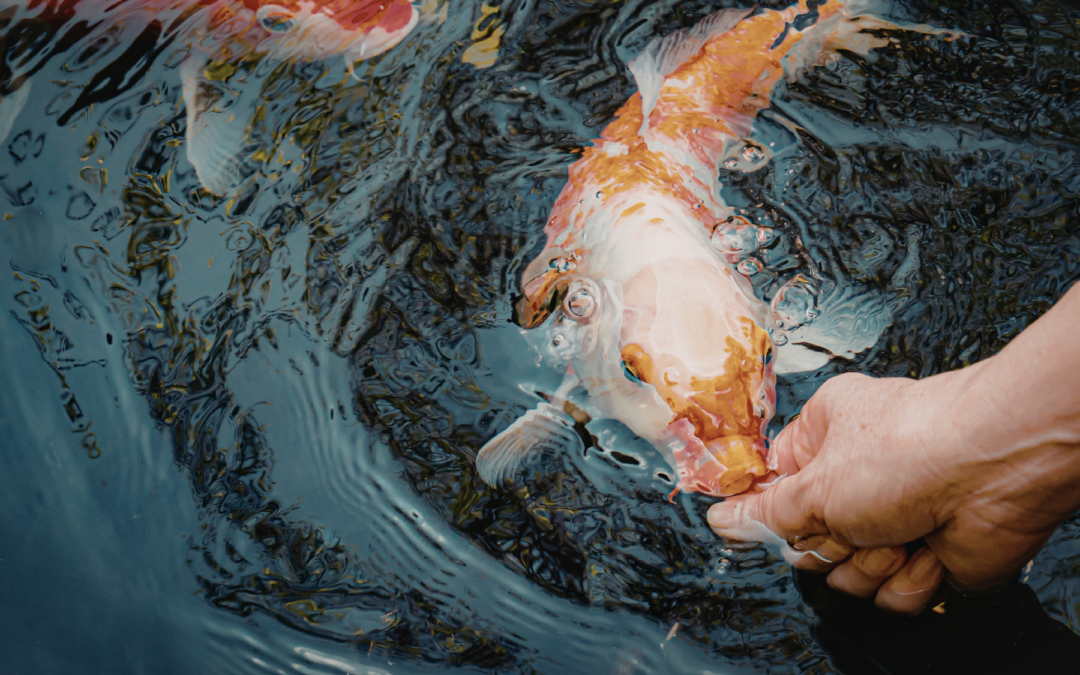
Few things confuse pond owners more than koi feeding in late winter.
One day it feels like spring.
The next morning is cold again.
Your koi start swimming more.
Then they disappear to the bottom.
So the question comes up every year: “Is it time to start feeding again?”
In Arizona, February is the most misleading month for koi care. And starting too early causes more long-term problems than starting a little late.
Let’s clear it up once and for all.
The Golden Rule for Feeding Your Koi
Koi eat based on water temperature, not air temperature.
Koi are cold-blooded. Their digestion is controlled by water temperature consistency, not warm afternoons.
That’s why feeding based on the calendar, or a single warm day, is the fastest way to cause water quality issues.
Here’s the temperature breakdown that matters:
Below 50°F (consistent)
❌ Do not feed
Koi digestion is too slow to process food safely.
50–55°F (consistent for several days)
⚠️ Begin very light feeding
Only wheat-germ or cold-water food.
55–60°F
✅ Gradually increase feeding
Still feed lightly and infrequently.
Above 60°F (stable)
✅ Normal feeding patterns return
Key word: consistent.
One warm afternoon doesn’t count. You’re looking for stable water temps, not spikes.
Why Feeding Too Early Is One of the Biggest Pond Mistakes
When koi digestion is slow and food is introduced too early:
- Food sits undigested in their system
- Waste increases rapidly
- Ammonia levels rise
- Water clouds
- Beneficial bacteria can’t keep up
This is why many “mystery spring algae blooms” and fish stress issues trace back to February feeding mistakes.
In other words: Feeding too early doesn’t help koi recover from winter; it stresses them while their systems are still waking up.
The Bacteria Lag Most Pond Owners Don’t Realize
Another reason feeding now can be tricky: Beneficial bacteria wake up slower than fish.
Fish metabolism begins increasing around 50–55°F. Bacteria often lag behind by weeks. That creates a biological gap:
- Fish produce waste
- Bacteria can’t process it efficiently yet
This is why early feeding often leads to ammonia spikes and cloudy water, even if the koi seem hungry.
How to Restart Feeding the Right Way
When your pond water stays consistently above 50–55°F:
Step 1: Start Slow
- Feed once every 2–3 days
- Offer only what koi can eat in 1–2 minutes
- Remove uneaten food immediately
Step 2: Use the Right Food
- Wheat-germ or cold-water koi food only
- Avoid high-protein spring/summer blends
Step 3: Observe Closely
Healthy, ready koi will:
- Swim steadily
- Approach food actively
- Respond quickly
If koi ignore food or act sluggish, pause feeding and wait.
Let Your Koi Tell You the Truth
Koi behavior is the most reliable indicator.
Ready Koi
- Rise easily in the water column
- Show curiosity
- Eat calmly but confidently
Not-Ready Koi
- Stay near the bottom
- Move slowly
- Ignore food
Fish don’t lie. Pond owners just rush them.
The Takeaway
When it comes to koi feeding, patience is protection. Starting a little late keeps koi healthier than starting too early ever will. If you’re unsure whether your koi are ready, waiting is almost always the safer move.
Talk to Your Local Koi Pond Professionals
Not sure if your koi pond is ready for feeding season? PondscapesAZ can assess water temperature, fish behavior, and pond balance to help you restart feeding safely this spring. PondscapesAZ is one of the most trusted pond repair companies near you in Phoenix, AZ. See why thousands of customers choose us to get the job done right!
Reach out to Pondscapes Today!
📞 480-987-7781

Owner, Lead Designer
Ralph Biezad is the owner and lead designer of Pondscapes, a premier pond and water-feature design-build company based in Gilbert, Arizona. With more than 20+ years of experience, Ralph has created hundreds of custom ponds, waterfalls, and aquatic landscapes throughout the Southwest. His philosophy centers on designing natural-looking, low-maintenance environments that blend seamlessly with Arizona’s climate and terrain.
As a Certified Aquascape Contractor, Ralph is recognized nationwide for his craftsmanship, creativity, and commitment to eco-balanced water features. His designs emphasize sustainability, habitat creation, and bringing clients closer to nature through water.

Recent Comments